In recent times, the way we use our homes has drastically changed. With remote work becoming more common, many of us have had to find creative ways to incorporate a functional workspace into our living areas.
Not everyone has the luxury of a dedicated home office, but there’s no need to fret!
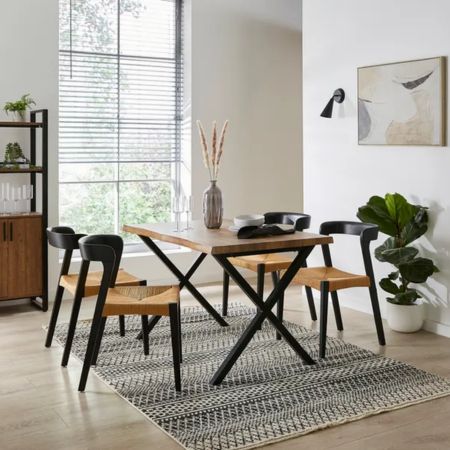
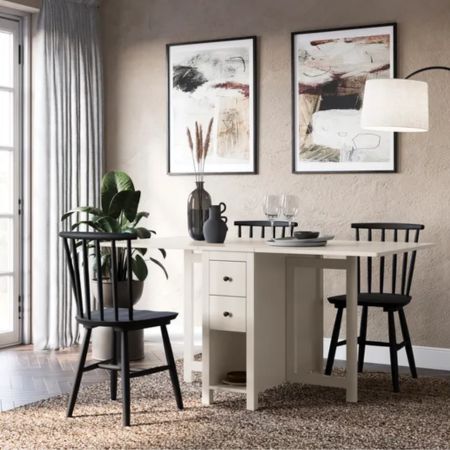
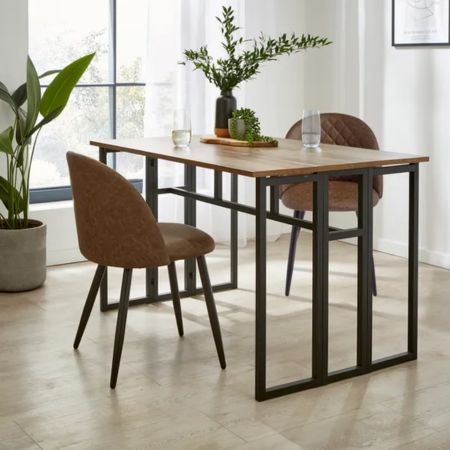
Your dining table can double as a stylish and practical home office desk with just a few clever adjustments.
Here, we’ll explore how to make this transformation seamless, ensuring that your dining table serves both purposes elegantly without compromising on style or functionality.
1. Clear the clutter and create a clean slate
The first step in turning your dining table into a home office desk is to clear the clutter. A tidy workspace is crucial for productivity, so start by removing any non-essential items from the table.
Clear away the dining mats, centrepieces, and any other decorative elements that take up space. This will give you a blank canvas to work with.
Consider using storage solutions like baskets or trays to keep everything organised. When it’s time to switch from work mode to dinner mode, having a designated place for your work essentials makes it easy to clear the table quickly.
A portable storage caddy can hold your laptop, notepads, and office supplies, making the transition from dining to working smooth and effortless.
2. Invest in ergonomic essentials
While dining chairs are designed for comfort during meals, they might not provide the support needed for extended periods of work.
To maintain a healthy posture, consider adding an ergonomic chair cushion or backrest to your dining chair.
If your chair’s height isn’t adjustable, a seat cushion can also help raise you to the optimal height for typing.
Additionally, if your dining table is too high or too low for comfortable work, consider a laptop stand or a small stack of books to bring your screen to eye level.
This simple adjustment can help prevent neck and back strain, making your dining table more comfortable as a workspace.
3. Use lighting to your advantage
Lighting plays a significant role in both dining and working environments. Dining areas often have ambient or mood lighting, which is great for meals but may not be ideal for focused work.
To create a suitable workspace, ensure that your dining table is well-lit. If possible, position your table next to a window and natural light, which can boost mood and productivity.
If your dining area lacks natural light or the overhead lighting is too dim, add a task lamp to your setup. A small, portable desk lamp can provide the direct lighting needed for tasks like reading or writing. Opt for a lamp with an adjustable arm so you can direct the light exactly where you need it.
4. Personalise your workspace
One of the perks of working from home is the freedom to personalise your workspace. Transform your dining table into an inspiring home office by adding a few personal touches.
A small potted plant, a favourite mug, or a piece of artwork can make your workspace feel more inviting and uniquely yours.
However, since the dining table still needs to function as a place for meals, keep personal items minimal and easily movable.
A small tray can be a great way to group personal items, making it easy to relocate them when it’s time to transition back to dining mode.
5. Incorporate storage solutions
To avoid a cluttered look, incorporate smart storage solutions around your dining area. A sideboard or a nearby shelving unit can serve as a storage hub for your office supplies.
Use decorative boxes or baskets to keep items like paperwork, chargers, and stationery out of sight but within easy reach.
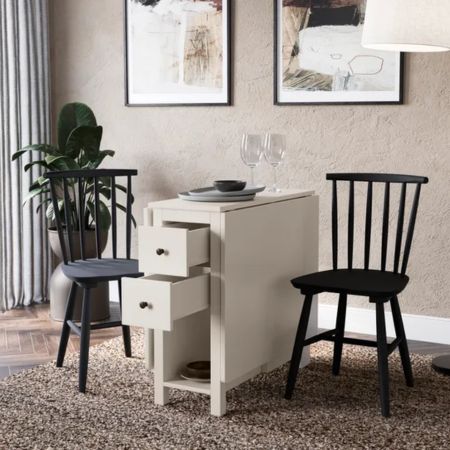
If your dining table has drawers, utilise them to store office essentials. Otherwise, a slim storage cart on wheels can be a great addition, allowing you to roll your office supplies away at the end of the workday.
6. Establish boundaries between work and dining
One of the challenges of using a shared space for work and dining is maintaining a clear boundary between the two.
To create a mental separation, establish a routine for setting up and clearing away your workspace.
At the start of your workday, set up your laptop, notepad, and any other essentials. At the end of the day, clear everything away, signalling the end of work and the start of leisure time.
If you have a flexible dining area, consider changing the table arrangement slightly when it’s time to dine.
These small changes can help reinforce the boundary between work and personal time, promoting a healthier work-life balance.
7. Add multifunctional décor
Since your dining table is now doing double duty, opt for décor that serves both functions. A stylish table runner can add a touch of elegance during meals and also serve as a protective layer for your table when working.
Choose a neutral or minimalist design that complements both your dining and office aesthetic.
A vase with fresh flowers or a bowl of fruit can also work as multifunctional décor, providing a refreshing focal point whether you’re working or dining. The key is to select items that enhance the space without overwhelming it.
Consider adding a compact desk
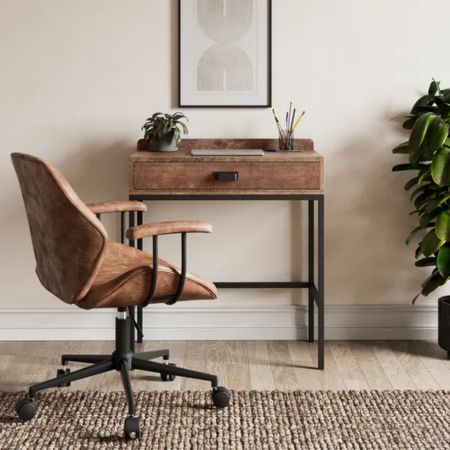
If your living area has some free space, then consider adding a compact desk in the corner or next to a wall. A desk measuring around 70cm wide by 40cm deep is big enough to place your laptop and mouse there. Here are two compact solutions you can consider:
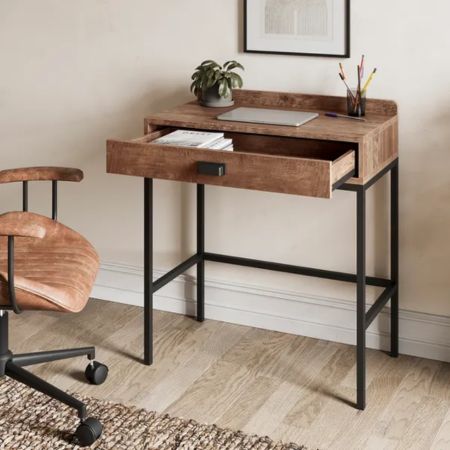
The Fulton Compact Desk measures only 70cm wide by 39cm deep, plus it has a handy storage drawer. It’s crafted from responsibly sourced wood and is priced at £139.
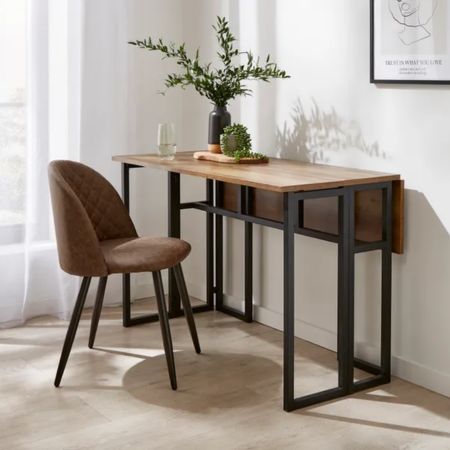
If your living area is really tight on free space, then consider getting this Evelyn Folding Desk. It measures 83cm wide by 53cm deep and can be easily folded, so it takes very little space. It’s priced at only £49.
Having a designated desk can significantly improve your productivity and well-being. A specific workspace, even if compact, creates a routine that boosts efficiency and signals to your mind that it’s time to concentrate.
Conclusion
Transforming your dining table into a home office desk doesn’t mean sacrificing style or comfort. With a few thoughtful adjustments, you can create a versatile space that caters to both work and dining needs.
By clearing clutter, enhancing ergonomics, and adding personal touches, your dining table can effortlessly transition from a productivity hub to a place of relaxation and socialisation.