
Jacquard is a decorative fabric with patterns woven directly into the material rather than printed or embroidered onto its surface. The technique can create everything from subtle geometric textures to elaborate floral and damask designs.
One of the most important things to understand about jacquard is that it isn’t a specific material. Jacquard can be woven from cotton, polyester, silk, wool and other fibres, meaning its feel, weight and durability can vary considerably.
You’ll find jacquard used in clothing as well as around the home, particularly for upholstered furniture, curtains, cushions and bedding.
What Does Jacquard Mean?
The word jacquard describes a method of producing patterned woven fabric.
With printed fabric, a design is applied after the cloth has been produced. With jacquard, the threads themselves create the pattern as the fabric is woven. This gives many jacquards their distinctive texture and visual depth.
In simple terms:
Jacquard = a pattern woven into the fabric rather than printed on top of it.
The name comes from French weaver and inventor Joseph Marie Jacquard, who helped revolutionise textile production in the early 19th century.
Jacquard vs Printed Fabric
One of the easiest ways to understand jacquard is to compare it with printed fabric.
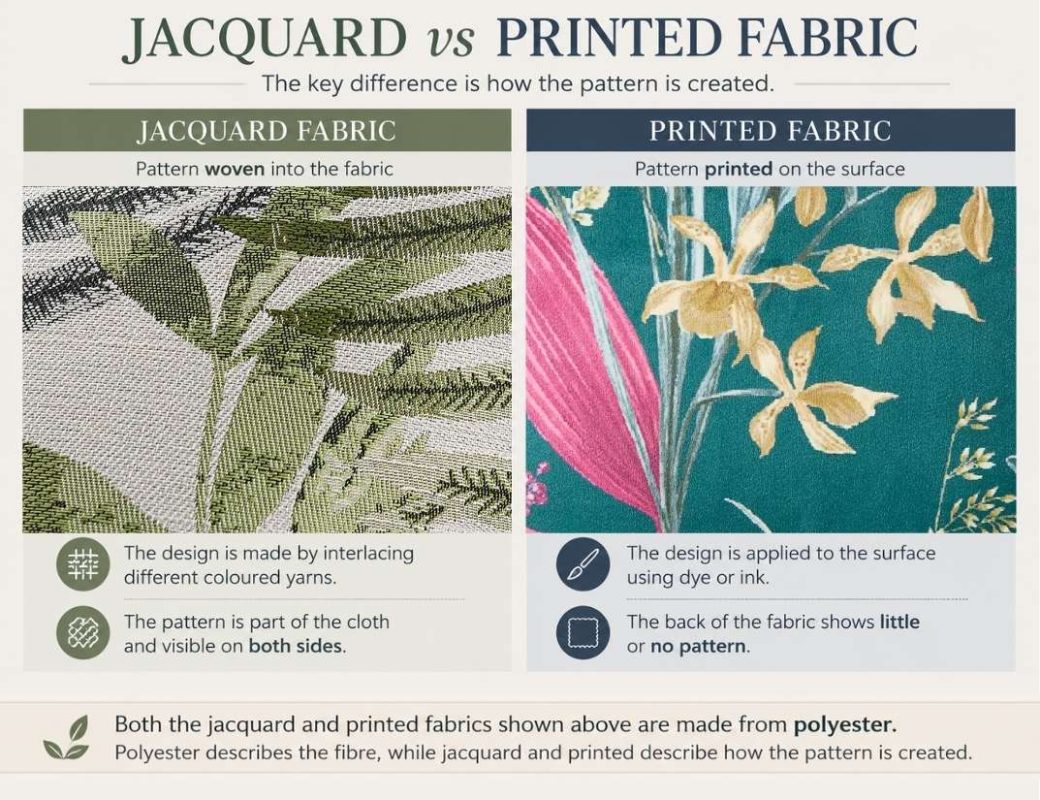
Jacquard patterns are woven into the cloth, while printed patterns are applied to the surface of an already woven fabric.
With jacquard, differently coloured yarns can be interlaced to form the design as the fabric is woven. With printed fabric, the underlying cloth is produced first and the decorative design is subsequently applied to its surface using methods such as dyes or inks.
What Is Jacquard Fabric Made Of?
Jacquard isn’t limited to one material because the term describes the weaving technique rather than the fibre.
It can be made from:
- Cotton
- Polyester (or recycled polyester)
- Wool
- Silk
- Linen
- Viscose
- Blended fibres
This explains why two jacquard fabrics can look and feel completely different.
A lightweight cotton jacquard may feel soft and breathable, for example, while a dense polyester jacquard designed for an armchair could be heavier and more structured.
Is Jacquard Polyester?
Jacquard can be made from polyester, but jacquard and polyester don’t mean the same thing.
Polyester describes the fibre. Jacquard describes how the pattern is woven.
That’s why you might find curtains or upholstered furniture described as having a jacquard pattern while the composition says 100% polyester or 100% recycled polyester. Both descriptions can be correct.
What Is Cotton Jacquard?
Cotton jacquard is simply jacquard fabric woven using cotton yarn.
Depending on its construction and weight, it can be used for clothing, bedding, curtains, cushions and other furnishings. Cotton can give jacquard a softer, more natural feel than some heavier synthetic upholstery fabrics.
How Is Jacquard Fabric Made?
Woven fabrics are made by interlacing two sets of threads: warp threads, which run lengthways, and weft threads, which run across them.
Jacquard weaving allows individual warp threads, or small groups of them, to be controlled with great precision. By repeatedly raising selected threads while the weft passes through, detailed patterns can be built directly into the cloth.
Historically, Jacquard’s system achieved this using punched cards containing instructions for the loom. Modern machinery controls the process electronically, making intricate and highly detailed designs possible on a large scale.
What Is a Jacquard Weave?
A jacquard weave is a woven structure in which the positioning of the threads creates the decorative design.
Rather than applying flowers, leaves, diamonds or other motifs afterwards, the pattern becomes part of the cloth itself.
An easy way to understand the difference is:
Printed fabric: The cloth is woven first and the pattern is added to its surface.
Jacquard fabric: The pattern is produced by the threads while the cloth is being woven.
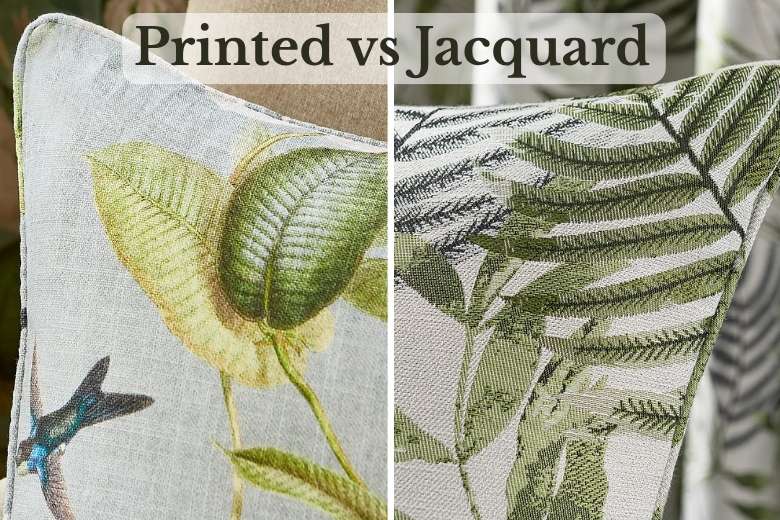
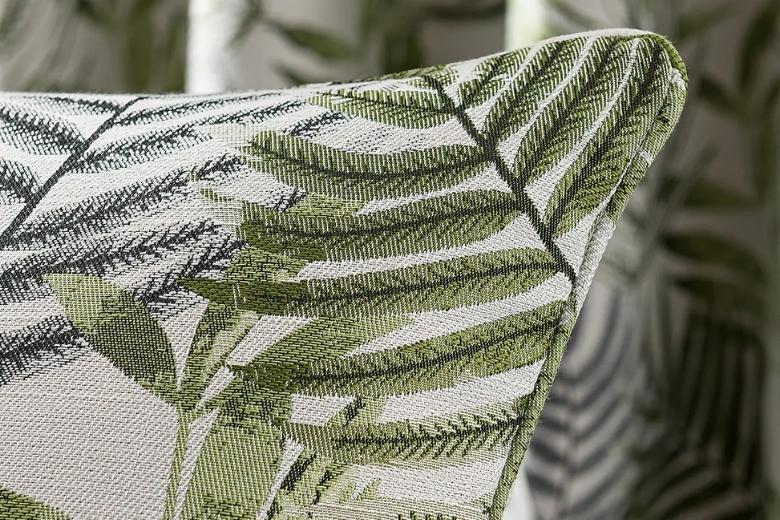
This close-up of the Leaf Jacquard Cushion (on the right) shows a botanical jacquard pattern woven into its 100% polyester cover. Look closely and you can see the texture created by the individual woven threads.
What Does Jacquard Fabric Feel Like?
There isn’t one texture shared by all jacquard fabrics.
Depending on the fibres and construction, jacquard can feel:
- Smooth and silky
- Soft
- Textured
- Slightly raised
- Thick and structured
- Lightweight and flexible
A silk jacquard dress and a polyester jacquard armchair, for example, could feel completely different despite both being jacquard.
What they share is a design that forms part of the woven fabric itself.
Jacquard is particularly well suited to detailed and repeating patterns, including: florals and botanical motifs, damask patterns, geometric designs, stripes, and abstract patterns.
What Is Jacquard Fabric Used For?
Jacquard is used in both fashion and interior design.
In clothing, you may find it used for dresses, jackets, skirts, formalwear and accessories.
Around the home, common uses include: sofas and armchairs, upholstered dining chairs, headboards, curtains, cushions, throws, bedding, and table linen.
For interiors, jacquard offers an effective way of introducing both pattern and texture rather than relying solely on printed decoration.
Jacquard Upholstery
Jacquard can make a particularly striking upholstery fabric when an intricate pattern is used across a large piece of furniture.
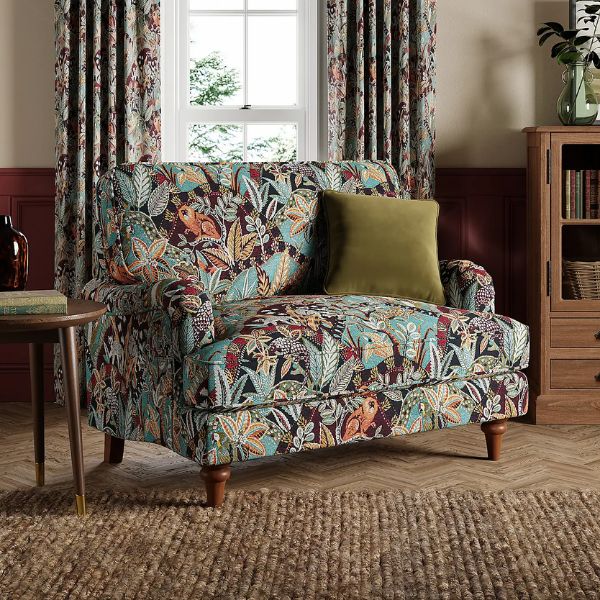
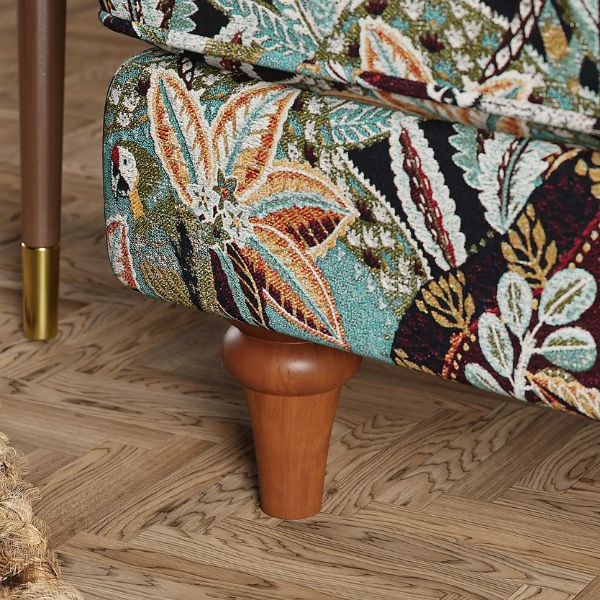
The Beatrice II Jacquard Nature’s Exhibitionists Snuggle Chair is upholstered in 100% polyester jacquard featuring a bold nature-inspired design. It’s a good example of how jacquard can transform the fabric itself into a prominent decorative feature rather than simply adding subtle texture.
Is Jacquard Fabric Good for Upholstery?
Jacquard is frequently used for upholstered sofas, armchairs, dining chairs and headboards. Its woven designs can add texture and visual interest, while some heavier constructions can provide the durability needed for furniture.
However, the word jacquard alone doesn’t tell you whether a fabric will be suitable for a heavily used sofa.
Its performance also depends on factors such as:
- Fibre composition
- Weave density
- Abrasion resistance
- Fabric weight
- Snag resistance
- Colour fastness
- Intended use
A lightweight decorative jacquard intended for curtains may perform very differently from a fabric specifically manufactured for seating.
When choosing jacquard furniture, check the manufacturer’s fabric specifications and care instructions rather than judging durability from appearance alone.
Different Types of Jacquard Fabric
Jacquard is an umbrella term encompassing numerous styles of patterned woven fabric.
Damask
Damask typically features elaborate repeating designs. Differences in the weave can produce contrasting matt and lustrous areas, sometimes allowing the design to be seen in reverse on the opposite side.
Brocade
Brocade usually features elaborate, often multicoloured or raised motifs. It has traditionally been associated with luxurious clothing and decorative interiors.
Matelassé
Matelassé has a textured surface that can resemble quilting, although the raised effect is created through the fabric’s construction rather than conventional padded quilting.
Jacquard fabrics can also be categorised according to their fibre, such as cotton jacquard, silk jacquard, wool jacquard and polyester jacquard.
Jacquard vs Brocade: What’s the Difference?
Jacquard and brocade are closely related, but the terms don’t mean exactly the same thing.
Jacquard refers to the broader weaving technique, while brocade is a decorative type of fabric that can be created using jacquard weaving.
Brocade is usually more ornate, often featuring prominent motifs and multiple colours. Jacquard encompasses a much wider variety of styles, from subtle geometric textures to detailed damasks and brocades.
An easy way to remember the distinction is:
Brocade can be a jacquard, but not every jacquard is brocade.
Jacquard vs Embroidery
The main difference between jacquard and embroidery is how and when the design is created.
With jacquard, the pattern is formed while the fabric itself is being woven.
With embroidery, the underlying fabric has already been produced and additional threads are stitched onto it to create the design.
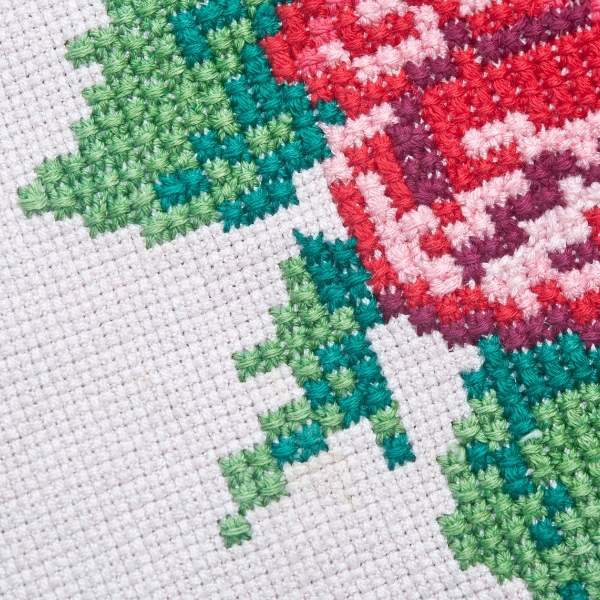
This means embroidery adds decoration to an existing textile, whereas a jacquard pattern forms part of the fabric’s woven structure.
In the example shown, the coloured threads are stitched over the surface of the base fabric to create the floral design. This raised stitching is a useful visual clue for distinguishing embroidery from a woven jacquard pattern.
Advantages and Disadvantages of Jacquard Fabric
One of jacquard’s biggest advantages is its ability to produce intricate designs with genuine woven texture.
Other potential benefits include:
- Detailed patterns and visual depth
- Traditional and contemporary designs
- A wide choice of natural and synthetic fibres
- Options suitable for furniture, curtains and other furnishings
- Patterns that are woven rather than surface printed
There are some potential disadvantages too. Intricate jacquards can be more expensive, some textured designs may be prone to snagging and heavier fabrics aren’t suitable for every application.
Care requirements can also vary significantly depending on the fibres used.
Is Jacquard Fabric Sustainable?
Jacquard itself can’t be described as sustainable or unsustainable because it is a weaving technique rather than a particular raw material.
Its environmental impact depends on factors such as the fibres used, how they’re produced, dyeing and finishing processes, manufacturing methods, durability and what happens to the textile at the end of its life.
Jacquard can be made from natural fibres such as cotton and wool, conventional synthetic fibres or recycled materials such as recycled polyester.
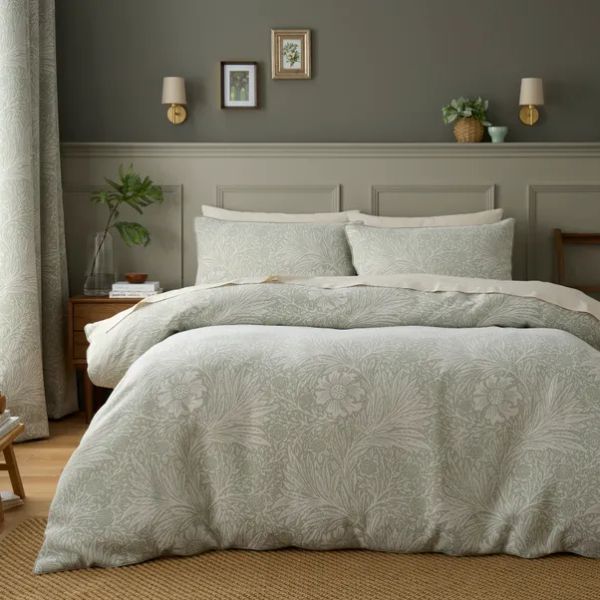
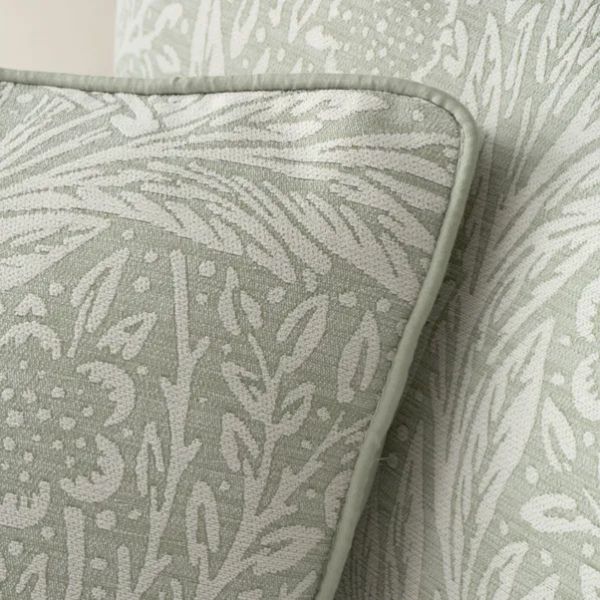
The Marigold Jacquard Duvet Cover & Pillowcase Set is a useful example: its Arts and Crafts-inspired botanical design is woven into soft chenille fabric made from 100% recycled polyester. This shows how jacquard weaving can be combined with recycled fibres rather than jacquard itself determining a product’s sustainability.
If you’re looking for more sustainable furniture or furnishings, check the actual fibre composition, recycled content and relevant certifications rather than assuming the word jacquard indicates environmental performance.
How Do You Clean Jacquard Fabric?
There isn’t one correct method for cleaning every jacquard fabric.
A polyester upholstery jacquard, cotton curtain and silk jacquard garment could all require very different care.
Always follow the manufacturer’s care instructions.
For jacquard upholstery, regular gentle vacuuming with an appropriate upholstery attachment may help remove dust and debris. Spills and stains should be treated according to the furniture manufacturer’s cleaning instructions.
Don’t assume a jacquard is machine washable simply because another jacquard product is.
Frequently Asked Questions
Is Jacquard Fabric Good Quality?
It can be, but jacquard alone isn’t a guarantee of quality. Fibre quality, yarns, weave density, finishing and intended use all affect the quality and durability of the finished fabric.
Is Jacquard Fabric Hot?
Not necessarily. Some jacquards are dense and warm while others are lightweight. The fibre content, weight and construction are more important than the fact that the fabric uses a jacquard weave.
Is Jacquard Fabric Good for Summer?
Lightweight jacquards made with breathable fibres such as cotton can be suitable for warmer conditions. A dense, heavy jacquard is likely to feel warmer.
Is Jacquard Fabric Good for Winter?
Heavier jacquards can work well during cooler weather, particularly when made with insulating fibres such as wool. Again, warmth depends on the individual fabric.
Is Jacquard Breathable?
It can be. Breathability depends largely on the fibre and construction. A lightweight cotton jacquard can behave very differently from dense synthetic jacquard upholstery.
Why Is Jacquard Fabric Expensive?
Jacquard can cost more because producing intricate woven patterns requires sophisticated weaving machinery and more complex construction than basic plain fabrics. The fibres, yarn quality, number of colours and finishing processes can also affect the price.
Final Thoughts
Jacquard is best understood as a method of weaving decorative patterns directly into fabric rather than a particular material.
That’s why jacquard can take so many forms, from lightweight cotton clothing to curtains, bedding and durable upholstery. It can be made from cotton, wool, silk, polyester, recycled polyester and other fibres, with each combination producing different characteristics.
If you’re choosing jacquard furniture or furnishings, don’t judge the fabric by its name alone. Check its fibre composition, durability, intended use and care requirements to understand how it is likely to look, feel and perform in your home.
