
If your sofa has seen better days or no longer fits your space, your first thought might be to take it to the tip. But before you do, consider giving it a second life.
A sofa in good condition can do far more than free up room in your living area — it can furnish a home for someone in need, raise money for important causes, and keep bulky waste out of landfill.
Donating your old sofa instead of discarding is a small act that can make a big difference.
Key Things to Check Before You Arrange a Pick-Up
- Condition matters – The sofa should be clean, structurally sound (no broken springs or legs), free of major stains or pet-damage and generally in saleable condition.
- Fire-safety label – If the sofa is upholstered, it needs a valid fire-safety label attached according to UK regulations. Many charities will decline items missing these labels.
- Access and size – Make sure you’re clear about how the item will be moved out of your home (stairs, narrow halls, tight turns) and whether the charity can handle collection of bulky pieces.
- Pick-up availability & service area – Free collection may depend on your postcode, item condition, and the charity’s capacity. Booking early helps.
Many charities will also ask whether you’d like to Gift Aid your donation. If you’re a UK taxpayer and agree, the charity can claim an extra 25% from HMRC on the sale value of your items — at no cost to you. It’s an easy way to make your donation go even further.
How to Get the Sofa Ready
- Vacuum inside crevices, remove pet hair and make it as presentable as you can.
- Locate and check the fire-safety label (often beneath cushions or stitched into a seam).
- Dismantle what you can (e.g., detachable legs or sofa bed frame) if tight access is involved.
- Take a photo of the sofa in its spot and one of its underside/label — many charities will ask for photos ahead of collection.
- Clear a path for the removal team and decide whether you’ll be home or leave it in an agreed safe area.
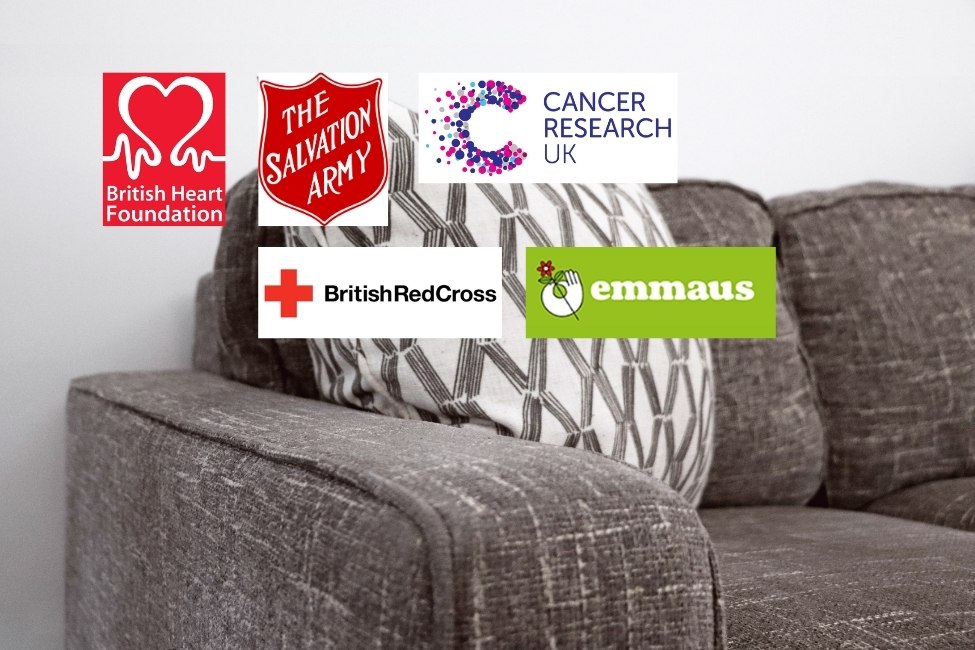
7 Charities That Accept Used Sofas as Donations
1. British Heart Foundation (BHF)

2. Cancer Research UK

3. British Red Cross

They accept furniture (such as sofas, beds, armchairs) via these specialist shops, though you’ll want to call ahead to check free collection availability.
Donated items are either sold to raise vital funds for humanitarian work, or passed directly into homes of those in need.
They also offer Gift Aid on donated goods. If you’re a UK taxpayer and agree to Gift Aid your donation, the charity can claim an extra 25% from HMRC on the amount your items sell for — at no cost to you. This means your sofa donation could raise even more money for their cause.
4. Sue Ryder

Because they rely on resale value, they stress that items should have valid fire-safety labels (for upholstered furniture) and avoid white goods, which they generally cannot accept.
By donating through Sue Ryder, you contribute to meaningful care services while giving your furniture a second life.
5. St Vincent de Paul Society (England & Wales)

The charity redistributes some items directly to families in need and resells others to fund their services.
They emphasise that donations must be in good condition and have the correct fire-safety labelling. By donating through SVP you’re supporting both reuse and community wellbeing.
6. Emmaus UK

Many of their regional branches offer free furniture collection services and state that proceeds help sustain their communities.
They welcome furniture in saleable condition including sofas, armchairs, and larger household items—but stress that donations must meet their criteria (condition, labeling, etc.). By donating, you give both the furniture — and someone in need — a fresh start.
7. The Salvation Army

The Salvation Army’s trading arm handles donations of furniture and larger household items to fund vulnerable-people services across the UK and Ireland.
Their donation centres and specialist branches invite furniture donations, and while free collection is not guaranteed everywhere, some centres will collect larger items like sofas and beds.
The funds from the resale of donated furniture support life-changing services such as housing, training and community outreach. By passing on your old couch through their system you’re helping steer good value away from waste and into meaningful impact.
Tip: Always check your local branch of each charity for their specific collection rules and postcode coverage.
Alternatives to Donation
- Council collection: Book a bulky waste collection through your local council. Most councils offer this service for a small fee and ensure the sofa is recycled where possible.
- Recycling centres: Take it to your nearest household waste and recycling centre, where materials like wood, foam, and fabric can be properly processed.
- Upcycling projects: Look for local workshops or community reuse schemes that refurbish or repurpose old furniture.
- Give it away online: List your sofa for free on Freecycle, Gumtree, or Facebook Marketplace — someone handy may be able to repair or restyle it.

Shopping Tip: If you’re searching for a new sofa or home furniture made with sustainability in mind, explore our collection of eco-friendly furniture pieces.
Each item is crafted from sustainably sourced wood and upholstered in recycled or responsibly sourced fabrics, offering quality craftsmanship and care for the environment.
Final Words:
If your sofa is still in decent shape but you’re ready to say goodbye, donating is a thoughtful and impactful choice. It’s easy, helpful and far more meaningful than sending it to waste.
With a little prep, you can free up space in your home, provide comfort to someone else, and do your bit for the planet.
